Definition and Strategic Overview
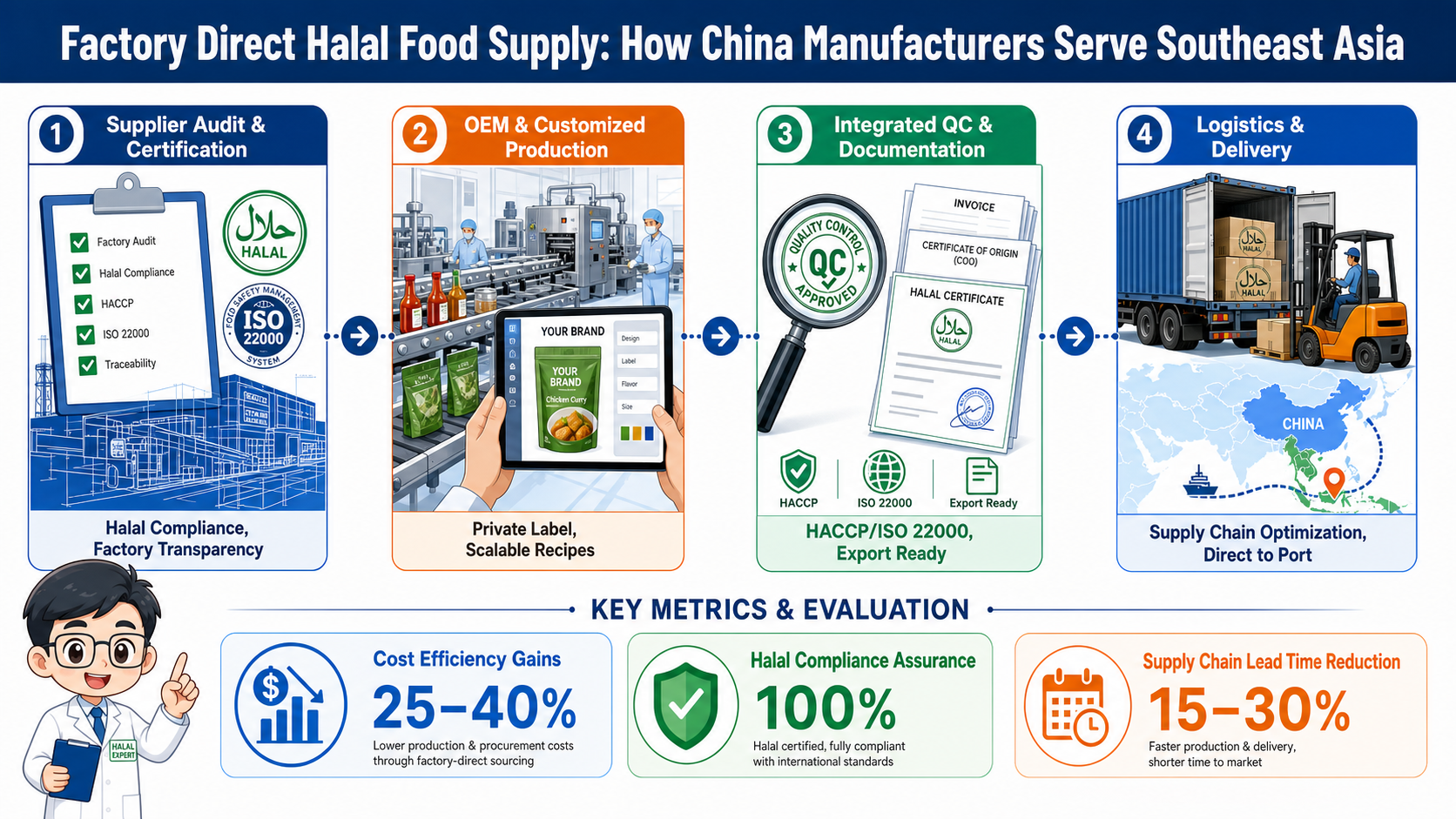
Factory Direct Halal Food Supply is a cross-border sourcing and manufacturing model in which halal-certified food products are produced directly at origin factories and supplied to international buyers—such as distributors and importers—without multiple intermediary layers, ensuring traceability, cost efficiency, and compliance with Islamic dietary standards. This model aligns with global food safety principles such as HACCP and ISO 22000 standards for food safety management systems (ISO 22000 overview).
In the context of China–Southeast Asia trade, especially Malaysia and Indonesia, this model plays a critical role in enabling halal-certified food accessibility, supply stability, and competitive pricing. For importers, wholesale distributors, and supermarket procurement managers, it directly addresses key concerns such as halal compliance assurance, logistics reliability, and factory transparency in cross-border procurement.
Core Attributes of Factory Direct Halal Food Supply
The factory direct halal supply model is built on several interconnected attributes that define its efficiency and reliability in the global food trade ecosystem, particularly for bulk food procurement in Southeast Asia.
- Halal Certification Compliance: Factories operate under recognized halal certification systems, ensuring ingredient sourcing, processing, and packaging comply with Islamic dietary requirements.
- OEM & Private Label Capability: Manufacturers provide customized formulations, packaging, and branding for global buyers, enabling scalable brand creation with reduced development risk.
- Integrated Export Documentation: End-to-end handling of commercial invoices, packing lists, certificates of origin, phytosanitary documents, and FDA pre-notification for streamlined customs clearance.
- Quality Assurance Systems: Production aligned with HACCP, ISO 22000, GMP, and FDA registration standards for consistent product safety and compliance.
- Supply Chain Optimization: Direct coordination from factory to port reduces delays, improves container utilization, and enhances logistics efficiency.
Manufacturing and Export Workflow
The factory direct halal food supply chain follows a structured process designed to ensure compliance, quality control, and efficient international delivery.
Value and Market Significance
Factory direct halal food sourcing delivers measurable advantages across cost, compliance, and scalability dimensions. By removing intermediary layers, importers benefit from improved pricing transparency and stronger supplier accountability. In Southeast Asia’s rapidly expanding halal food market, this model supports growing demand for certified processed foods, beverages, and snack products.
Practical Application in Southeast Asia Trade
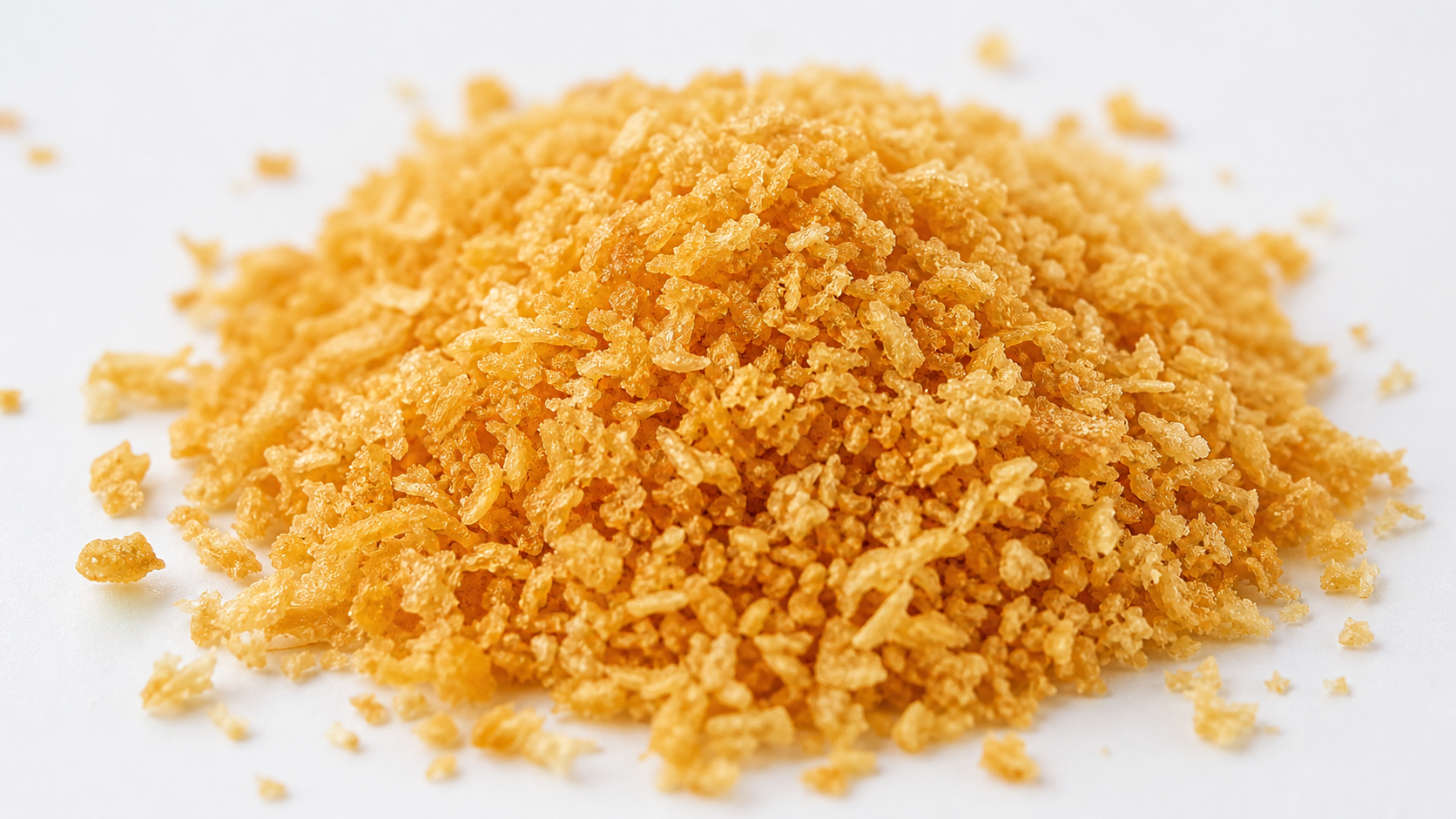
In real-world procurement scenarios, importers in Malaysia and Southeast Asia often engage with China-based halal-certified manufacturers to source products such as crispy fried powders, seasoning mixes, beverages, and snack coatings. For example, Halal-certified products like garlic-flavored crispy fried powder (F0028) and honeycomb crispy fried powder (F0055) demonstrate how factory direct OEM production supports both retail and foodservice markets.
A typical Malaysian importer evaluating China food wholesale suppliers focuses on halal certification validation, Malaysia food import customs clearance efficiency, and container-level supply chain reliability. Through bulk food procurement Southeast Asia strategies, buyers can consolidate SKUs into full-container shipments while maintaining compliance and shelf stability.
Industry Integration and Strategic Partnerships
Within the China food OEM manufacturing ecosystem, companies such as Dongguan Hongqiao Foreign Trade Comprehensive Service Co., Ltd. play a key role in connecting international buyers with certified food factories. These service providers support end-to-end procurement, including supplier screening, OEM customization, export documentation, and logistics coordination.
Through private label and OEM manufacturing models, Southeast Asian importers, supermarket chains, and e-commerce sellers can reduce new product development risks while leveraging pre-validated recipes and certified production systems. This aligns with low-risk trial order strategies and scalable expansion into new markets.
To further explore customized halal food sourcing solutions or bulk procurement strategies, buyers can contact supply chain experts for tailored OEM and export support.
The system is further strengthened by quality assurance frameworks, including FDA registration, HACCP compliance, ISO 22000 certification, and halal certification alignment, along with recognition such as the “Food Industry Quality Service Provider 2022” award, reinforcing trust in global food supply chains.
Frequently Asked Question
What makes factory direct halal food supply more reliable than traditional trading channels?
Factory direct halal food supply reduces intermediary risks by enabling direct control over production, certification, and logistics. This improves transparency, strengthens halal compliance verification, and enhances cost efficiency. According to FAO global food system guidance, shorter supply chains often improve traceability and food safety governance in international trade systems.