Halal vs. Haram Food
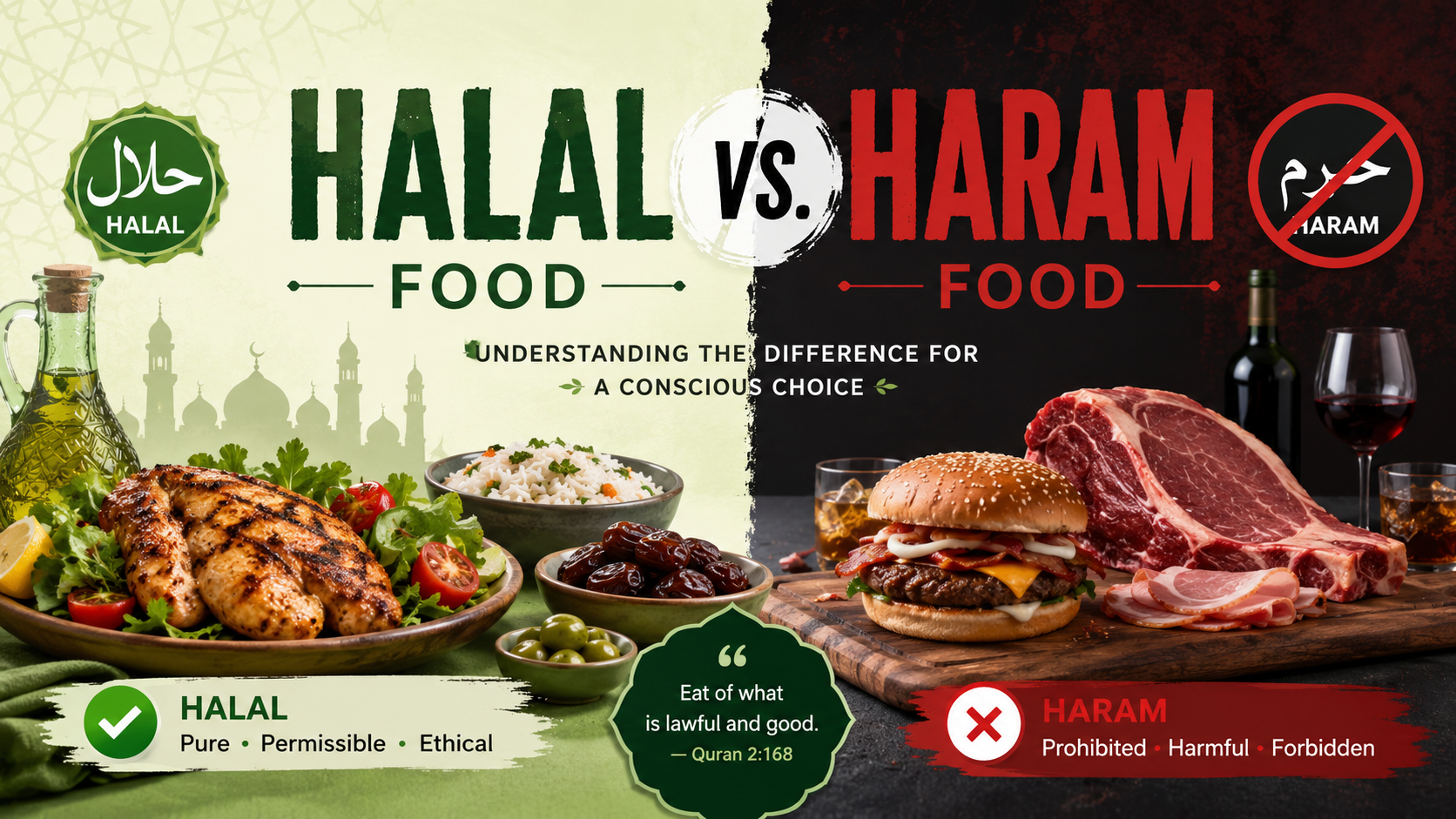
Whether you are grocery shopping or dining out, you have likely noticed a green "Halal" certification logo on various food packages and restaurant windows. To many consumers, this may look like an unfamiliar label, but to over two billion people worldwide, it represents an essential standard governing their daily dietary choices.
The terms Halal and Haram define the boundaries of what is permissible to consume, but understanding their modern application requires a closer look at their historical origins, processing rules, and contemporary industrial significance. By examining these factors, consumers can better navigate the global food market and understand the meticulous standards behind Halal certification.
The Historical Origins of Halal Guidelines
The origins of Halal food guidelines date back to the Arabian Peninsula during the early 7th century, where they were established through the foundational texts of Islamic tradition, specifically the Quran and the Hadith. Historically, these dietary laws served multiple vital purposes for society, primarily focusing on sanitation, public health, and survival in a harsh desert environment.
In the arid climate of the ancient Arabian desert, food preservation was a major challenge, making strict hygiene laws necessary for public safety. Prohibitions against consuming blood, carrion (animals that died of natural causes or illness), and swine served as highly effective practical measures to prevent foodborne illnesses, parasitic infections, and the spread of deadly disease.
Beyond physical health, these ancient guidelines introduced strict ethical rules for livestock management long before the advent of modern animal welfare laws. Cruelty to animals was explicitly forbidden under these regulations, and the prescribed slaughter process was carefully designed to be as swift, hygienic, and painless as possible for the animal.
As global trade routes expanded across Asia, Africa, and Europe over the centuries, these regional dietary customs evolved systematically into a highly structured, international culinary tradition. Today, these practices bridge historical hygiene protocols with modern food production standards.
The Core Definitions: Allowed vs. Forbidden
The concepts of Halal and Haram originate from Arabic terminology and serve as the foundational pillars of traditional dietary laws regarding food consumption and processing. The term Halal (حلال) translates to "lawful," "permissible," or "allowed," referring to any food, drink, or object that complies with traditional dietary guidelines and is approved for consumption. Conversely, the term Haram (حرام) translates to "forbidden," "prohibited," or "unlawful," representing anything that is explicitly banned under these culinary regulations.
In traditional dietary jurisprudence, the overarching core principle states that "everything is permissible unless explicitly forbidden." This fundamental rule means that the vast majority of natural foods are inherently Halal by default, while only a specific, clearly defined list of items is classified as Haram.
What is Haram? (Forbidden to Consume)
According to historical and traditional culinary records, the boundaries of Haram food are very distinct and strictly enforced to prevent contamination. The primary prohibition applies to pork and its by-products, as swine are traditionally considered structurally unclean. Not only is pork meat forbidden, but any derivative—such as lard or pork-based gelatin commonly found in gummy candies, yogurts, and medicine capsules—is also strictly Haram.
The consumption of running or congealed blood from any animal is similarly prohibited due to ancient and modern understanding of blood as a vector for pathogens. Additionally, any animal that dies of natural causes, illness, strangulation, a violent blow, a fall, or is scavenged by wild beasts is considered "carrion" and is strictly forbidden from entering the food supply.
For meat to be permissible, the animal must be dispatched following specific vocalized protocols and intent, meaning that animals slaughtered without following these steps are classified as Haram. Furthermore, alcohol in any form (liquor, beer, wine), alongside any substance that causes intoxication or alters the mind, is strictly prohibited. Finally, specific land animals and birds—including carnivorous animals with fangs (such as lions, tigers, dogs, and cats), birds of prey with talons (such as eagles and hawks), and amphibians like frogs—are entirely forbidden.
What is Halal? (Permissible to Consume)
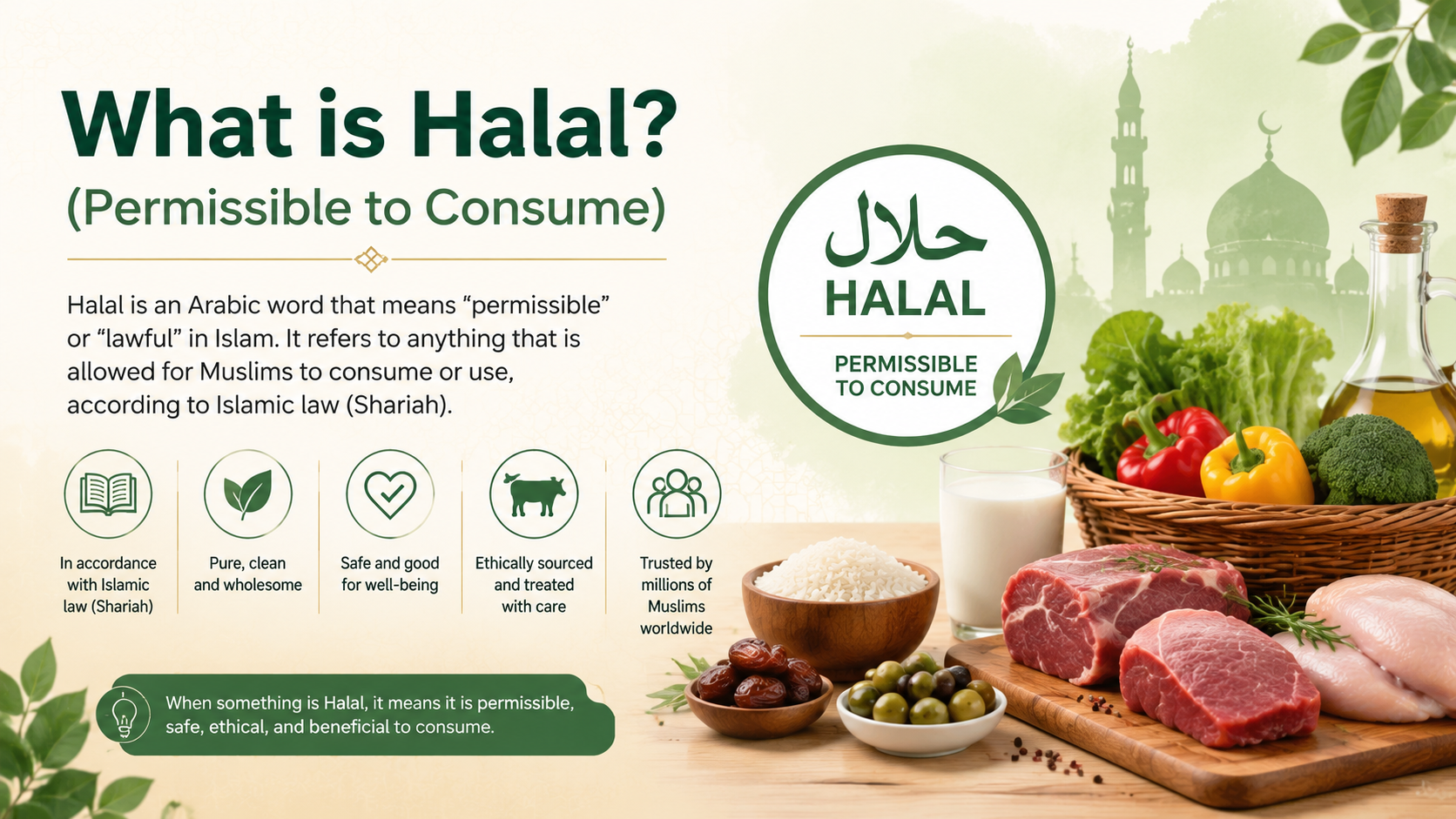
Aside from the items explicitly listed on the Haram restrictions, most foods are considered Halal, provided they meet certain procedural and sourcing criteria. The category of permissible meats includes herbivorous land animals and poultry, such as beef, mutton, lamb, goat, camel, chicken, and duck. However, these meats are only considered Halal if the livestock is processed using the standardized method of humane slaughter, known historically as Zabihah.
The standardized Zabihah method requires that the animal must be entirely healthy and alive at the time of processing. The act must be performed by a sane, qualified professional who invokes a specific standardized phrase during the process. A razor-sharp instrument must be used to swiftly cut the windpipe, esophagus, jugular veins, and carotid arteries, ensuring a rapid process that minimizes the animal's distress and allows the blood to drain completely.
In the case of seafood and aquatic life, the majority of traditional dietary schools agree that all marine animals, including fish, shrimp, crab, and shellfish, are naturally Halal. Marine wildlife does not require specific slaughter rituals, as these animals are permitted to be consumed normally after being harvested from the water.
All fruits, vegetables, grains, legumes, nuts, and mushrooms are also 100% Halal by nature. These plant-based foods remain permissible indefinitely, provided they do not experience cross-contamination with Haram substances, such as alcohol or animal fats, during industrial processing or packaging.
Halal vs. Haram Comparison Table
The following matrix provides a clear, structured visualization of food classifications under traditional dietary laws:
| Food Category | Halal (Permissible) | Haram (Forbidden) |
| Meat (Land) | Beef, lamb, chicken, duck (Must be Zabihah) | Pork, dog, cat, carnivorous animals, birds of prey |
| Seafood | Most fish, shrimp, crab, shellfish | Amphibians (e.g., frogs), crocodiles |
| Plants & Grains | All natural fruits, vegetables, rice, wheat, etc. | Plant products processed with alcohol or lard |
| Beverages | Water, milk, fresh juices, tea, coffee | Beer, wine, spirits, and any alcoholic drinks |
| Common Additives | Plant-based pectin, certified Halal beef/fish gelatin | Pork gelatin, enzymes/fats from non-regulated animals |
The Modern Challenge: "Hidden" Haram
In historical times, distinguishing between Halal and Haram was straightforward because consumers simply looked at whether the raw meat came from an allowed animal like a sheep or a forbidden animal like a pig. However, in today’s highly complex global food industry, many seemingly neutral foods contain hidden Haram ingredients introduced during mass manufacturing.
Industrial gelatin is a primary example of this challenge; widely used in candies, puddings, yogurts, and medicine capsules, it is frequently derived from pork skin or non-compliant cattle bones. Similarly, emulsifiers and enzymes used to improve the texture of bread, cheese, and baked goods are sometimes sourced invisibly from the organs of non-regulated animals. Furthermore, many liquid flavorings, such as pure vanilla extract, routinely use alcohol as a carrier solvent during production, rendering the final product non-compliant.
Because of these hidden variables, official third-party Halal certification has become crucial to the modern food industry. Independent certification bodies audit the entire supply chain—from raw materials and chemical additives to manufacturing lines and logistics—to guarantee that no cross-contamination occurs.
Finding Halal Food Around Me: A Practical Guide
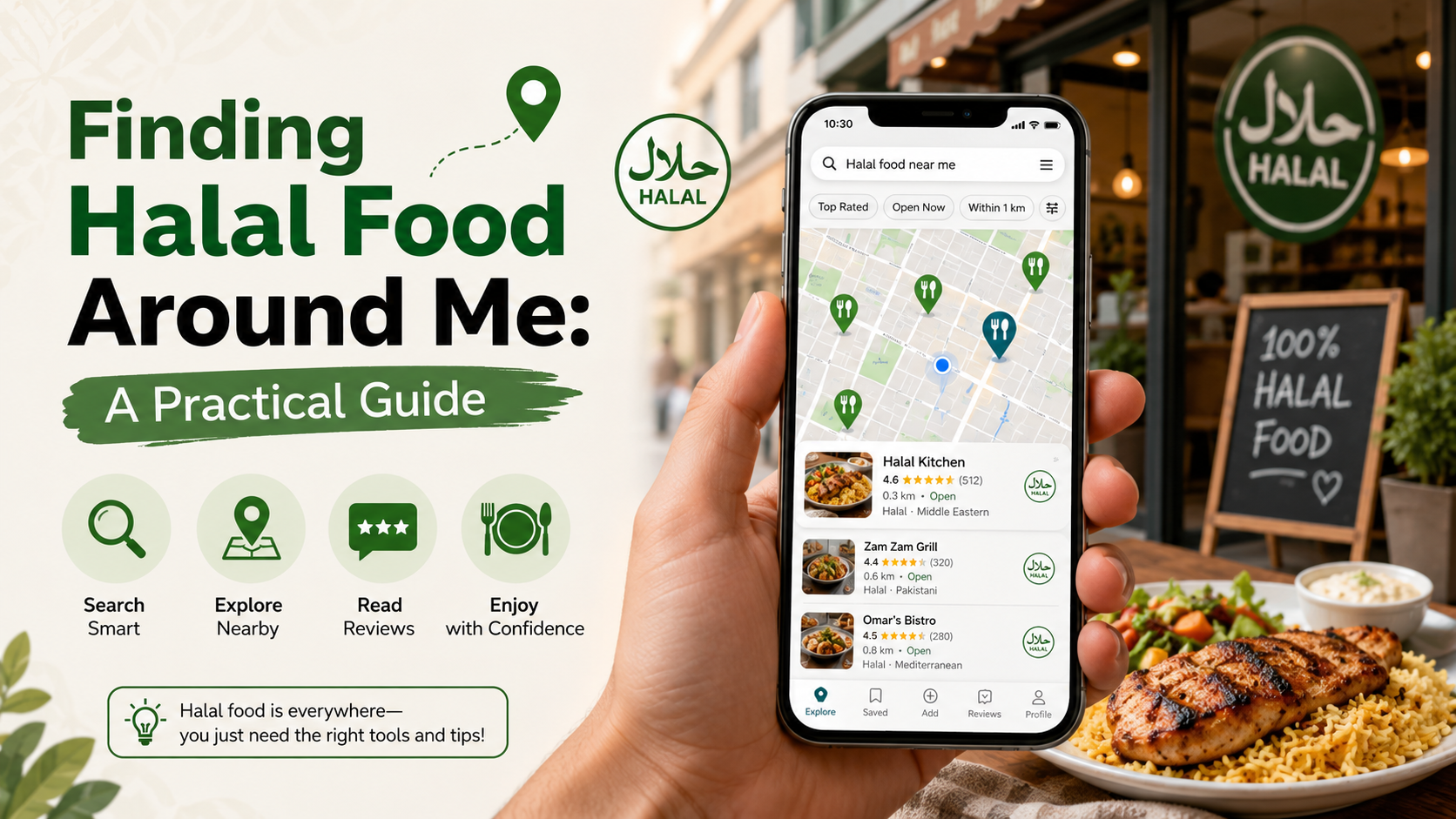
In today's interconnected world, finding compliant dining and shopping options in your immediate vicinity has become highly accessible. Whether you are traveling to a new city or exploring your local neighborhood, several dedicated tools, digital platforms, and observational strategies can help you identify certified establishments efficiently.
The most efficient way to locate compliant food nearby is through dedicated mobile applications and online directories. Platforms such as Zabiha (the world’s largest guide to Halal restaurants and markets) and Craving Halal allow users to turn on location services to view mapped results, read community reviews, and verify the certification status of nearby establishments. Additionally, mainstream platforms like Yelp, Google Maps, and TripAdvisor have highly active tagging systems where searching the keyword "Halal" will instantly filter verified local options complete with user photos and menus.
Certain international cuisines naturally align with Halal dietary frameworks due to the cultural traditions of their regions of origin. Exploring local neighborhoods known for Middle Eastern, Mediterranean, South Asian (Indian and Pakistani), and Southeast Asian (Malaysian and Indonesian) dining will frequently yield a high concentration of compliant options. For home cooking, searching for local ethnic supermarkets, international grocers, or dedicated butcher shops is often the most reliable method for sourcing certified raw meats and specialty imported ingredients.
When evaluating a newly discovered local establishment, look closely for official documentation displayed near the entrance or counter. A valid certificate issued by a recognized third-party auditing body (such as the ISA, IFANCA, or local regulatory boards) provides the highest level of assurance. In multi-cuisine or secular food courts, it is also standard practice to politely ask the staff about their ingredient sourcing and whether they use separate preparation surfaces and utensils to eliminate the risk of cross-contamination with non-compliant items.
Conclusion: Beyond Tradition to Health and Hygiene
For specific populations, adhering to Halal dietary laws remains a deeply ingrained cultural and traditional practice that dictates daily lifestyle choices. However, from a modern food science perspective, these systematic guidelines hold universal value that extends far beyond cultural boundaries.
Because Halal standards strictly exclude blood (which easily breeds harmful bacteria), carrion, and diseased animals while prioritizing clean, swift processing methods, many general consumers choose Halal options out of personal preference. For these secular consumers, the Halal label serves as a reliable benchmark for stringent cleanliness, structural hygiene, food safety, and humane animal treatment. Ultimately, understanding the differences between Halal and Haram broadens our cultural literacy and fosters mutual respect within our increasingly globalized culinary world.
References
-
Al-Qasimi, J. M. (2014). The Halal Food Handbook. Wiley-Blackwell. Available at: Wiley Online Library
-
Regenstein, J. M., Chaudry, M. M., & Regenstein, C. E. (2003). The Kosher and Halal Food Laws. Comprehensive Reviews in Food Science and Food Safety, 2(3), 111-127. Available at: IFT / Wiley Digital Archive
-
Riaz, M. N., & Chaudry, M. M. (2004). Halal Food Production. CRC Press. Available at: Taylor & Francis Group / CRC Press
-
Bonne, K., & Verbeke, W. (2008). Religious values determining Halal meat consumption. Agriculture and Human Values, 25(1), 31-47. Available at: SpringerLink
-
World Halal Authority (WHA). (2022). Standard for Halal Food Production: General Guidelines. WHA Regulatory Standard Documents. Available at: World Halal Authority Official Portal