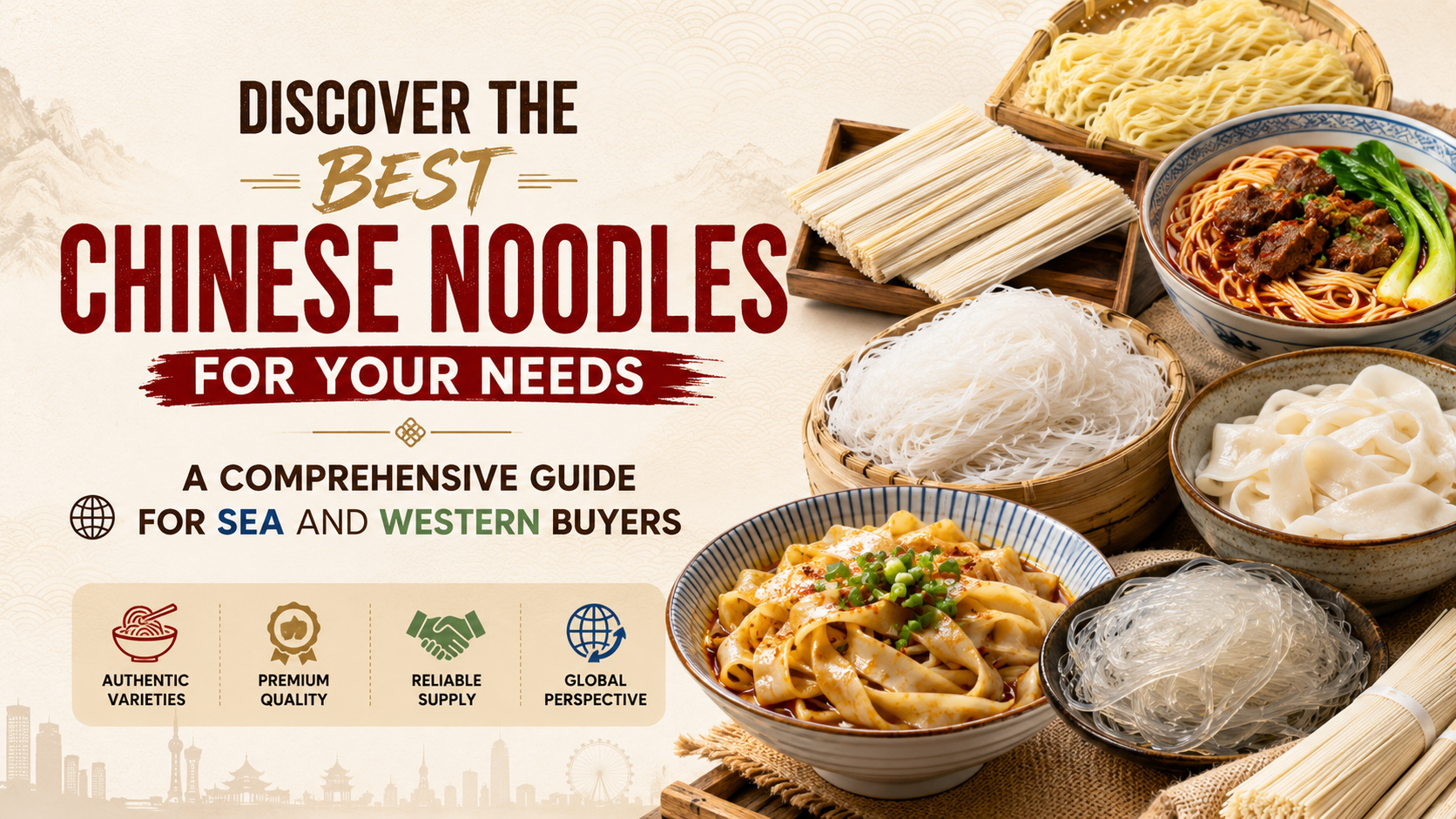
Like any major investment in the food supply chain, sourcing high-quality bulk Chinese noodles for distinct geographical regions comes with its own set of unique commercial challenges. Whether you are navigating the high-growth corridors of Southeast Asia (SEA) or meeting the rigorous regulatory standards of Europe, North America, and Australia, the procurement process can easily become overwhelming for overseas importers, wholesalers, and category managers. However, understanding their structural features, mechanical processing methods, and targeted consumer applications can make your purchasing decisions seamless and highly profitable.
When navigating the vast and fragmented Chinese noodles wholesale market, having a deeply rooted local supply chain partner makes all the operational difference. Working with an experienced master aggregator—rather than a single-output manufacturer with limited variety—enables chain supermarkets, foodservice buyers, and e-commerce sellers across both Asian and Western corridors to adapt rapidly to localized compliance landscapes while securing steady, scalable volume.
What Ingredients and Manufacturing Stages Determine Chinese Noodle Quality?
To select the right product for your destination market, a buyer must first understand its fundamental construction. Much like evaluating heavy machinery or packaging materials, the texture, shelf-life, and cooking performance of commercial Chinese noodles are strictly determined by three key manufacturing stages managed across automated industrial mills:
-
Stock Preparation (Raw Materials): The backbone of any authentic Chinese noodles product line is the precise blend of wheat flour, water, and functional additives like salt or alkali (sodium/potassium carbonate). According to cereal science research published by the American Association of Cereal Chemists (AACC), the protein network (glutenin and gliadin) requires precise hydration parameters to achieve optimal tensile strength, directly dictating whether the end-product achieves the desired "Al Dente" or Jindao bite.
-
Forming & Pressing (Textural Development): The dough undergoes continuous rolling and sheeting through automated multi-roller lines. Food engineering studies from the International Journal of Food Science & Technology demonstrate that vacuum mixing and kneading lines significantly eliminate microscopic air pockets, improving starch gelatinization and giving the finished wheat noodles a completely smooth, translucent appearance and superior structural integrity.
-
Finishing & Dehydration (Drying & Freezing Section): Premium frozen fresh Chinese noodles are instantly deep-frozen through IQF (Individual Quick Freezing) tunnels. As documented by the International Institute of Refrigeration (IIR), rapid freezing prevents the formation of large ice crystals that destroy the starch-protein matrix, locking in cell moisture and wheat aroma without raw microbial degradation. Conversely, dried Chinese noodles (hanging noodles) undergo a highly controlled, multi-zone slow-drying process, trading instant moisture for a prolonged, stable ambient shelf-life suited for international transit.
Why Choose One-Stop Food Consolidation Over Decentralized Sourcing?
For international importers, wholesalers, and e-commerce sellers, your geographical location heavily dictates your supply chain strategy, ocean freight cost optimization, and portfolio flexibility:
-
The Southeast Asian Context (High-Frequency Sourcing): For buyers in countries like Malaysia, Singapore, Indonesia, and the Philippines, shipping times from Chinese ports are short (typically 3 to 7 days). Importers in this region prioritize flexible, multi-SKU food-grade LCL (Less-than-Container-Load) consolidation. This enables E-commerce sellers and Asian supermarkets to maintain lower capital deployment, adapt to fast-moving flavor trends, and achieve high inventory turnover.
-
The Western Corridor Context (High-Efficiency Consolidation): For buyers in the USA, Europe, and Australia, ocean transit takes 20 to 40 days, and fluctuating freight rates represent a significant portion of landed costs. Buyers for Western Chain Supermarkets and Dollar Stores must prioritize maximum container payload efficiency (FCL - Full Container Load) and long-shelf-life products. Consolidating various regional noodle variants, premium flours, and base ingredients into a single food-grade container is vital to dilute the per-unit freight overhead.
Which Chinese Noodle Varieties Are Best for Supermarket Retail and Foodservice?
To eliminate the risks of human error and product inconsistency across transnational chains, modern food technology utilizes high-precision automated systems to replicate traditional artisanal chewing profiles. International category buyers must strategically differentiate between raw ingredients, processing classifications, and ultimate consumer prep formats when reviewing the core Types of Chinese Noodles available for bulk procurement.
Below is a professional B2B breakdown of the most commercially viable Chinese noodles product matrix tailored for global distribution:
| Noodle Type | Mechanical Simulation Feature | Textural Profile | Target Market & Application |
| Lamian / Pulled Style | Multi-stage progressive roller systems mimic the manual stretching and folding action, aligning gluten strands perfectly. | High elasticity, heavy tensile strength, zero chemical softeners. | Foodservice & Restaurants (Global): Perfect for classic beef broth, ramen-style dishes, and heavy Asian soup bases. |
| Daoxianmian / Knife-Shaved | Specialized high-speed CNC extrusion dies recreate the iconic tapered, ultra-thin edges and thick center of traditional hand-shaved noodles. | Thick, intensely chewy center with soft edges; superior sauce-holding capacity. | Chain Supermarkets & E-commerce: Highly visual wave-edges; ideal for high-heat stir-fries (Chow Mein) and western premium meal kits. |
| Jianshui Noodle / Wonton Style | Heavy-duty vacuum mixing simulates the rigorous traditional bamboo-pressing technique to eliminate micro-gaps. | Ultra-snappy, firm, and highly resistant to becoming soggy in hot broth over time. | Asian Supermarkets (SEA & West): The essential ingredient for authentic Cantonese Wonton noodles and Lo Mein. |
| Guanmian / Standard Dried | Fully automated continuous vertical extrusion combined with multi-zone air-drying grids for 100% uniformity. | Smooth texture, highly consistent cooking time, neutral wheat flavor profiles. | Mass Retail & Dollar Stores: Extremely budget-friendly price point, 18-month ambient shelf-life, and an ultra-stable supply chain. |
How to Navigate Non-Tariff Barriers and Global Food Compliance?
To avoid costly border rejections and optimize product-channel matching, your international Chinese noodles procurement must be segmented precisely by destination compliance profiles:
① What Are the Sourcing Requirements for Southeast Asian Halal Markets?
For Islamic-majority nations in SEA (such as Indonesia and Malaysia), Halal Compliance is an absolute legal prerequisite for mainstream retail distribution. Sourcing commercial Chinese noodles for these demographics mandates an audited supply chain where raw ingredients, factory lubricants, and processing lines are completely free from cross-contamination. Importers must ensure that contract mills hold valid Halal certifications recognized by local religious authorities, such as JAKIM (Malaysia), BPJPH/MUI (Indonesia), or Warees/MUIS (Singapore). Furthermore, because of the humid tropical climate, packaging barrier properties must be enhanced to prevent ambient spoilage during rapid store turnarounds.
② How to Comply with EU Regulation 1169/2011 and US FDA Standards?
European and North American regulators focus heavily on "Clean Label" initiatives, non-GMO wheat validation, and strict heavy-metal/pesticide residue maximum limits. Additionally, alternative grains such as Gluten-Free Rice Noodles or Buckwheat Soba are capturing significant market share among health-conscious Western consumers looking for functional wheat alternatives. When exporting to the EEA or North America, suppliers must actively manage raw material compliance to conform to rigid non-tariff barriers on animal-derived components (like egg-based noodles). For these markets, offering custom-formulated 100% plant-based alternatives that perfectly replicate the texture of traditional noodles using compliant plant extracts is the safest route to market clearance.
What Are the Most Frequently Asked Questions by International Food Importers?
Q1: How can an importer or chain supermarket buyer guarantee compliance for strict regions like the EEA and US FDA?
A1: Buyers must ensure their upstream trade supply chain strictly audits contract factories to guarantee they hold internationally recognized certifications, including BRCGS, IFS, and HACCP. For the EEA, a complete Label Compliance Review must be performed before leaving ports, verifying that all ingredient translations, allergen bolding, and nutritional declarations perfectly conform to Regulation (EU) No 1169/2011. For the US, facilities must be registered with the FDA with valid prior notices filed.
Q2: I am an E-commerce Seller / Private Label Importer. Do you support customized packaging and low MOQs for product testing?
A2: Yes. While a single factory typically demands high minimum orders, a master supply chain integrator allows you to consolidate multiple distinct Chinese noodles styles and matching ingredients into a single food-grade mixed container. We also provide complete OEM/Private Label artwork support, ensuring your packaging complies with local market packaging laws (like FDA or European CE/EFSA standards) while allowing you to test the market with lower initial capital risk.
Q3: Some EU countries have rigid non-tariff barriers on animal-derived components (like egg-based noodles). How is this managed?
A3: Raw material compliance is managed proactively. For markets within the EEA or countries with complex veterinary certificate requirements, suppliers offer custom-formulated 100% plant-based/egg-free alternatives that perfectly replicate the texture of traditional egg noodles using compliant plant extracts. If animal-derived ingredients are mandatory, the order must be routed exclusively to factories possessing authorized EU/border-inspection export credentials.
Why I Wrote This Guide: A Note from the Exporter
Dear Sourcing Professionals,
If you have read this far, you noticed this reads more like a food logistics whitepaper than a sales pitch. There are no flashing "Buy Now" buttons—because we believe transparency breeds trust in the international B2B arena.
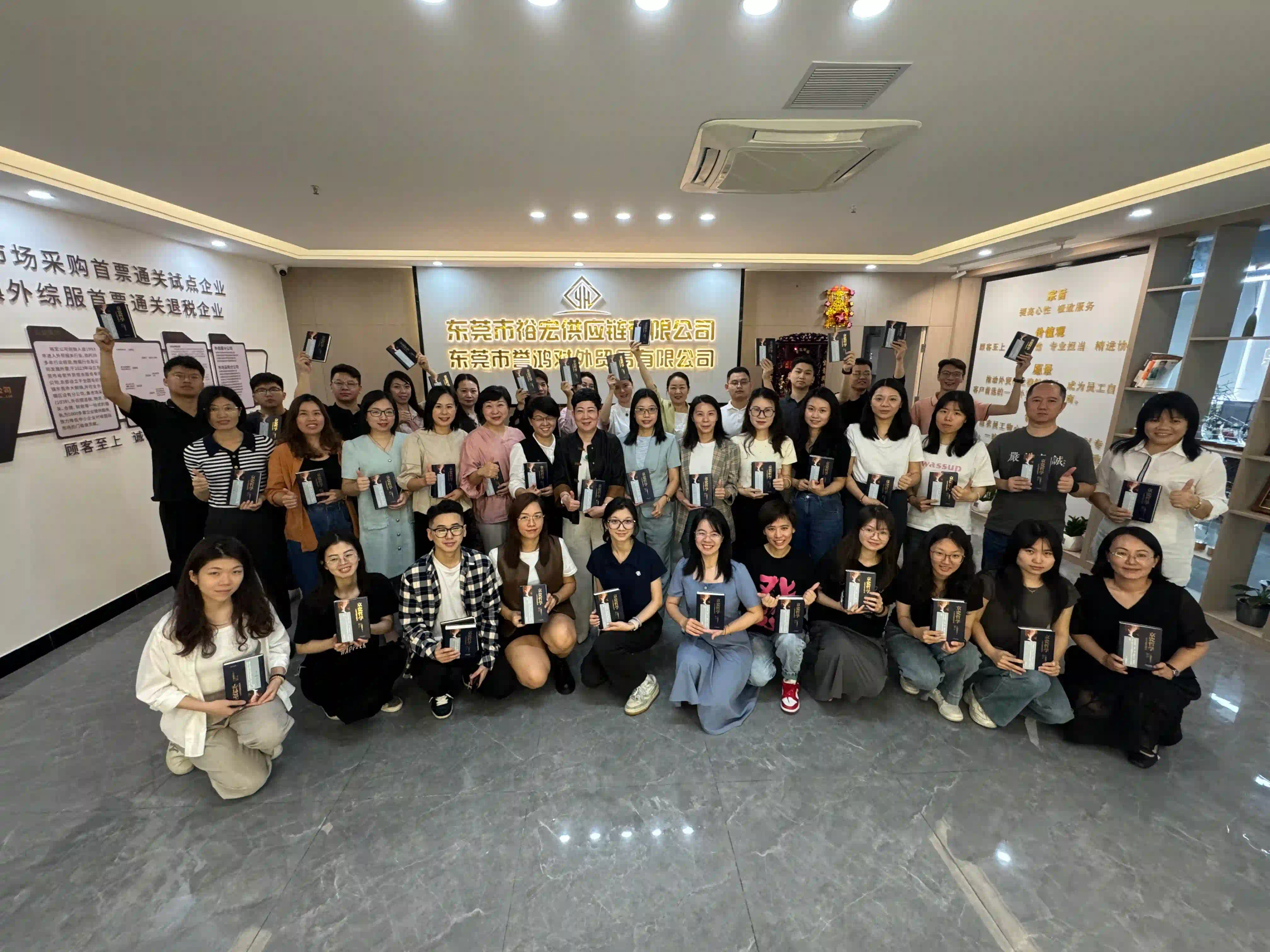
As the global trade team behind Yohu (Dongguan Hongqiao Foreign Trade Comprehensive Service Co., Ltd.), we have spent over 30 years navigating international trade and food supply chains. We have seen countless importers, wholesalers, and retail buyers stumble over invisible roadblocks: a single factory’s rigid MOQ, soaring freight from decentralized sourcing, custom container rejections due to a minor labeling non-compliance under EU Regulation 1169/2011, or a missing Halal credential at Southeast Asian ports.
We don't just want to sell you a container of Chinese wheat noodles; we want to streamline your global procurement. By integrating a vast network of over 50 top-tier, certified Chinese food factories, we manage quality control, food-grade LCL/FCL consolidation, and multi-lingual OEM compliance on your behalf. Whether you are stocking an Asian Supermarket chain, supplying a Food Service network, running an E-commerce store, or routing high-volume goods to Dollar Stores in the West or SEA, we consolidate your risk into a singular, transparent point of contact.
To make this partnership completely risk-free, you can visit our Global Trade Stations and Overseas Food Showrooms in Cambodia (Phnom Penh), Malaysia (Selangor), or Saudi Arabia (Riyadh) to evaluate our product portfolio within your local regional hub.
If you value data-driven logistics, strict regulatory compliance, and a highly efficient food supply chain, we are ready to support your business scaling.
👉 Explore Our Full Chinese Noodles Selection on our official catalog page, or contact our trade specialists directly to request your Customized B2B Selection and order your Free Sample Kit.
Reference Sources
-
AACC International ( Cereals & Grains Association ): Methods and Cereal Science Guidelines for Wheat Flour Hydration and Gluten Matrix Optimization in Commercial Chinese Noodles Production.
-
International Journal of Food Science & Technology ( Wiley Online Library ): Impact of Vacuum Mixing and Kneading Technologies on Starch Gelatinization and Structural Densification of Automated Wheat Noodle Sheets.
-
International Institute of Refrigeration ( IIR ): Technical Database on Individual Quick Freezing (IQF) in Starch-Protein Matrices: Prevention of Macromolecular Recrystallization and Microbial Degradation for Foodservice Export.
-
EUR-Lex ( European Union Law ): Regulation (EU) No 1169/2011 of the European Parliament and of the Council on the provision of food information to consumers for Importers and Chain Supermarkets.
-
Yohu Official Corporate Assets: Operational History, 30-Year Foreign Trade Service Profile, and 50+ Certified Factory Ecosystem Audits for Wholesalers and Retailers in SEA and Western Corridors. Yohu Official About Us Page.
For a closer look at these variations in action, this Ultimate Chinese Noodle Guide visualizes the textural disparities and authentic culinary prep methods between the varieties discussed above. This video provides critical visual context on how different shapes and processing styles affect sauce-holding capacity, which can help your category team better evaluate culinary applications during procurement.